Most stock advice tells you to shoot better. The more useful advice is to shoot what other people can't. The market is drowning in coffee cups, laptops on desks, and golden-hour portraits because anyone with a phone can make them. The categories that still pay are the ones with a barrier to entry, and the simplest barrier is access to a specialized industry the public never sets foot in.
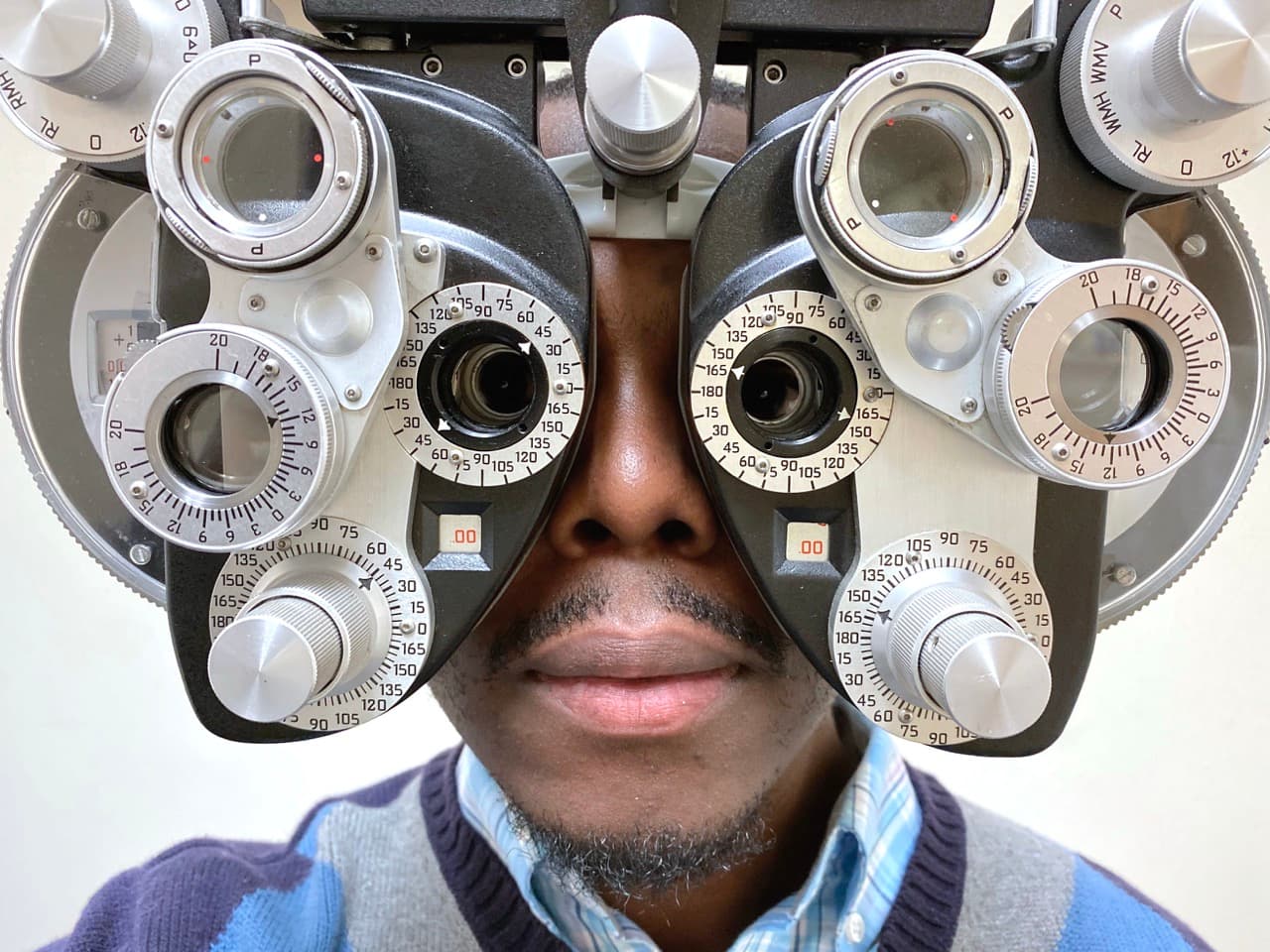
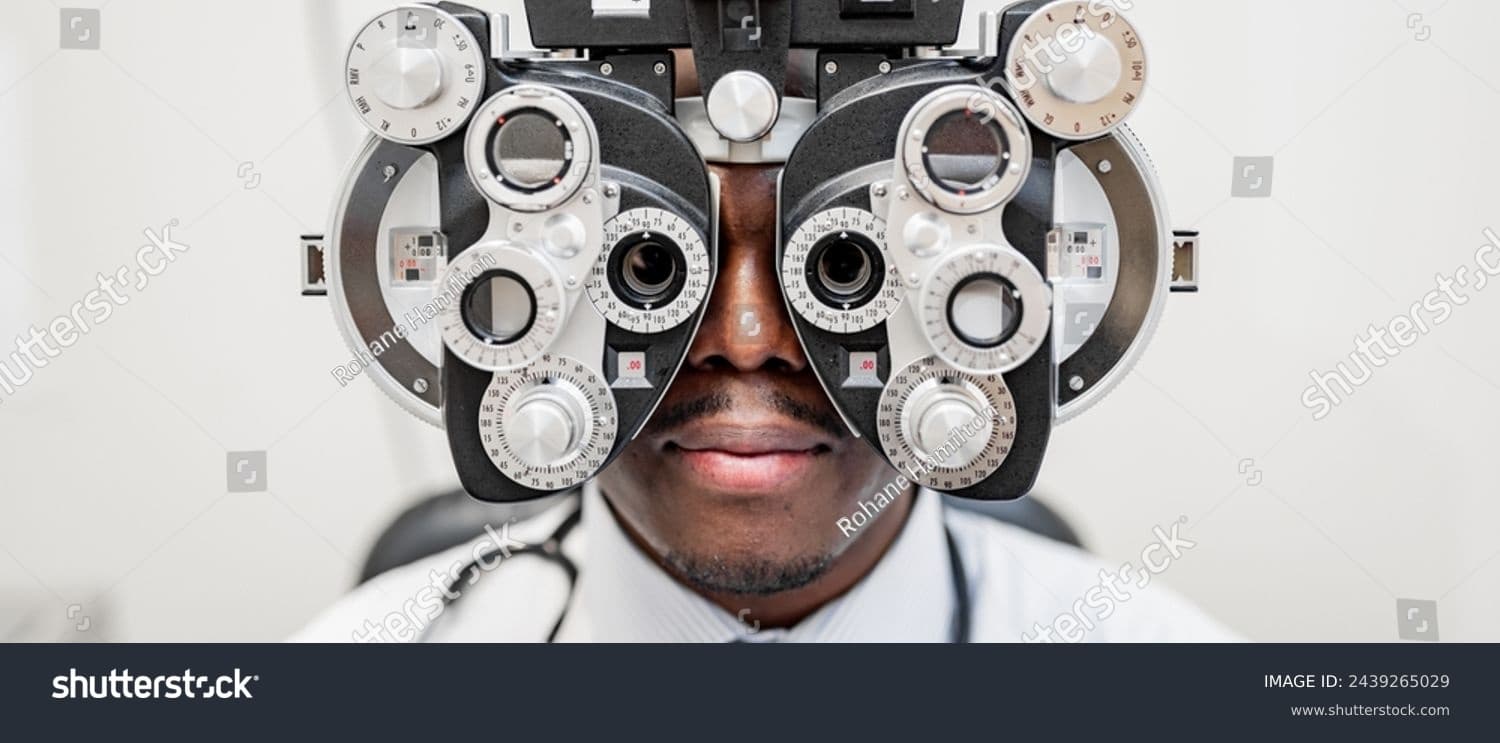
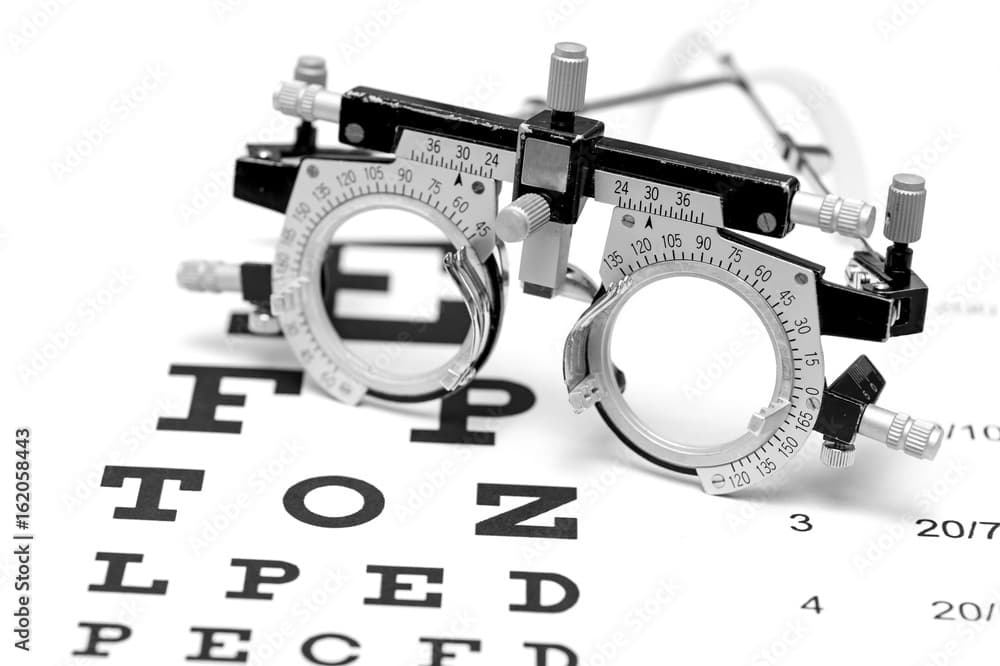
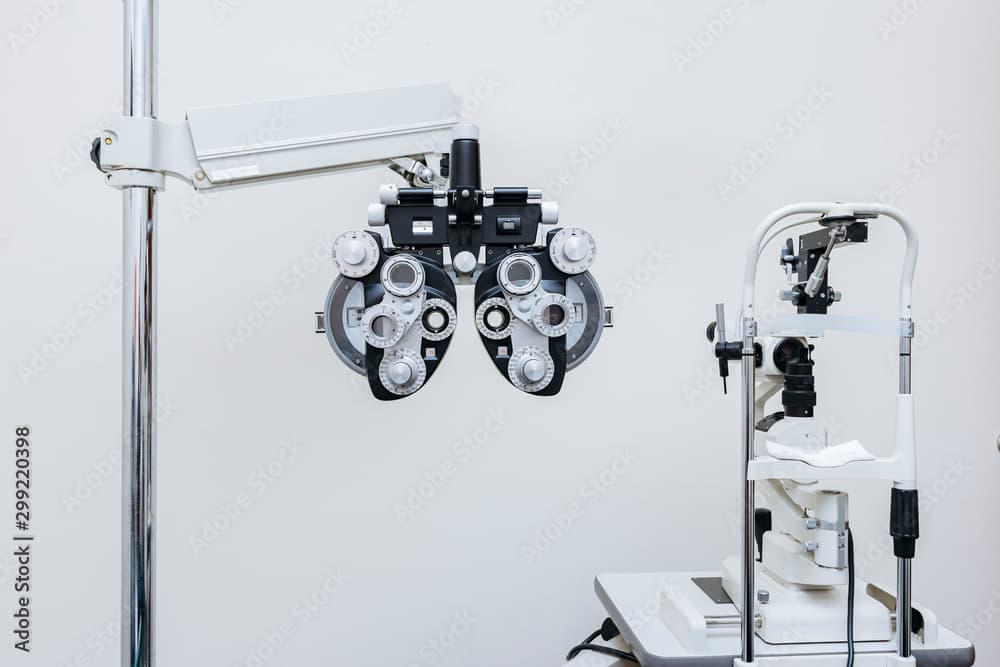
Here is the whole argument in one number. Search "phoropter" (the dialed instrument an optometrist swings in front of your face to prescribe glasses) on Shutterstock and you get roughly 4,848 results. For a global library with hundreds of millions of assets, that is essentially nothing. Several of my own eye care photos land on the first page for that term, and they sell. Saturation isn't a property of stock photography; it's a property of the easy subjects. Step into a harder one and you stand out by default.
Saturation is a problem of easy subjects, not stock itself
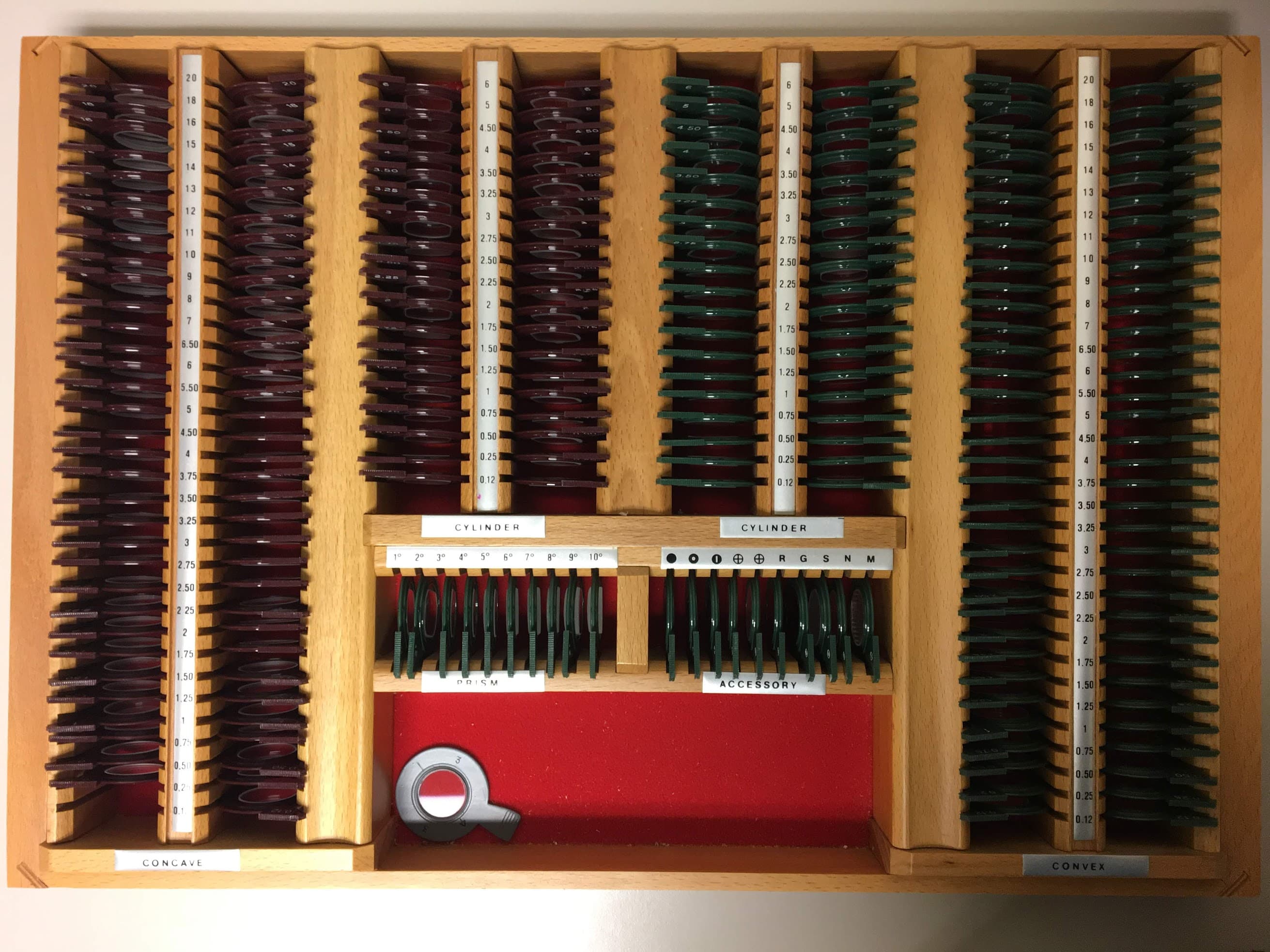
Run the searches yourself. "Phoropter" returns under 5,000 assets. "Slit lamp," "trial lens set," "tonometry," "retinoscopy" are thinner still. Compare that to "business meeting" or "happy family," which return tens of millions. Buyers in those crowded categories scroll past thousands of near-identical files; in eye care, a clean, correctly-labeled image is one of only a handful that fits.
The lesson generalizes well beyond eye care. Industrial inspection, dental labs, veterinary surgery, commercial kitchens, machine shops, agricultural equipment, marine repair: any field that requires credentials, equipment, or simply being allowed in the room is under-photographed for the same reason. The supply is thin because the access is thin.
Access is the moat
The reason these categories stay uncrowded is that you can't shoot them on a whim. You don't wander into an exam room and start photographing a slit lamp; you need to work in or around that world, or know someone who does. That friction is annoying, and it's also exactly the point. A subject that's inconvenient to reach is a subject your competitors haven't reached either.
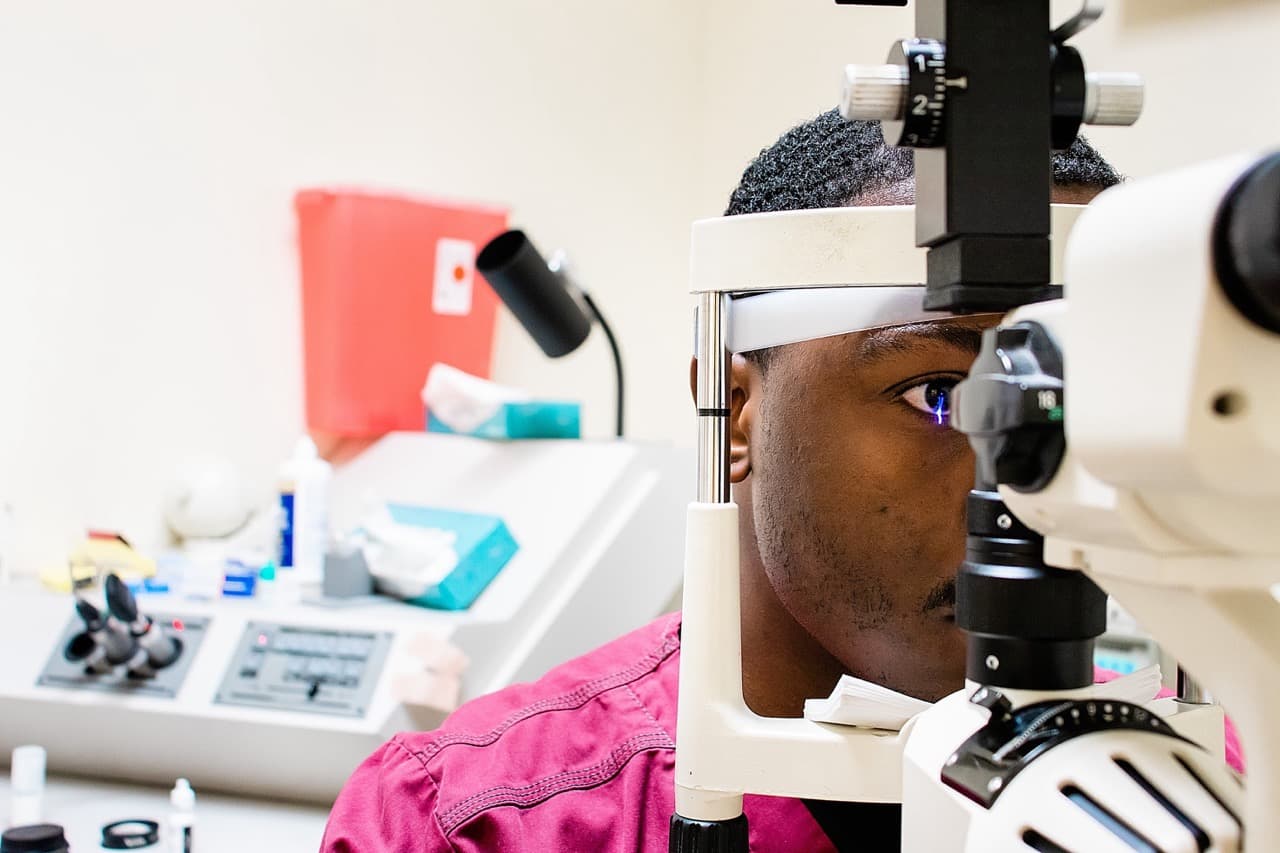
This is also where the modern reality of stock sits. Almost no one is a full-time stock photographer anymore. The people producing the best specialized work are practitioners who happen to carry a camera: the optometrist, the welder, the lab tech, the vet. If you already spend your days in a field outsiders rarely see, you are sitting on an inventory of images the market is quietly short on. The variety is there too, well past the obvious hero shot.
AI can't generate what it's never seen
There's a second, larger reason these niches are durable, and it cuts against the usual fear that AI is killing stock. Image generators are only as good as their training data, and training data mirrors the open market. The same scarcity that makes "phoropter" a thin search term means the models saw very few phoropters while training. Ask a generator for a "patient undergoing a phoropter eye exam" and you'll typically get a plausible-looking instrument with the geometry wrong, invented dials, and lenses that don't correspond to anything real. A practitioner spots the errors instantly.
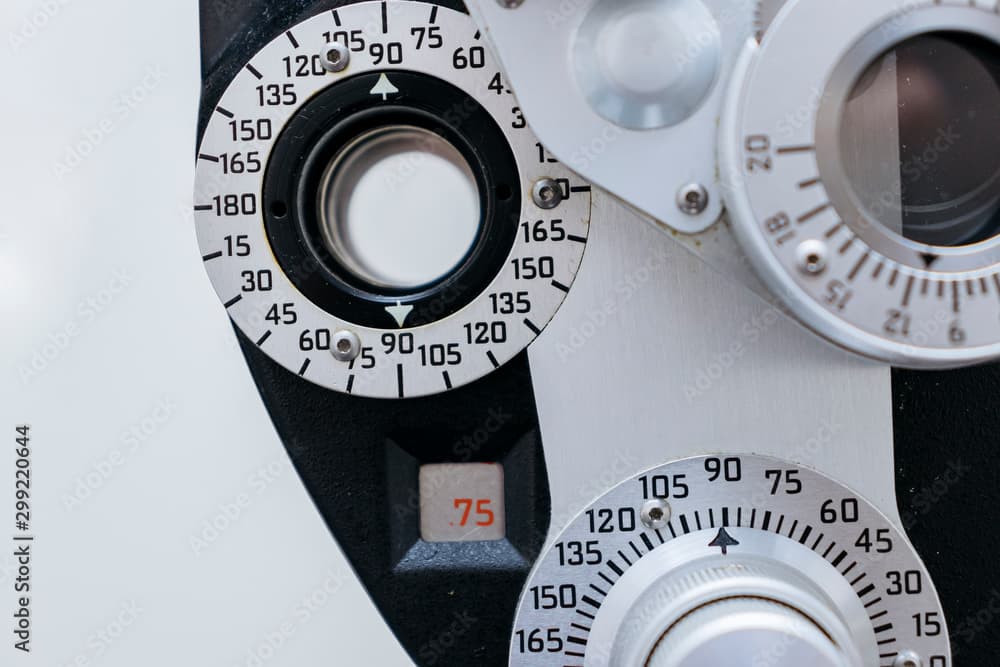
So even though Adobe, Shutterstock, and Getty all ship generators now, a buyer who needs an accurate phoropter, slit lamp, or surgical setup will try a prompt, get something subtly broken, and fall back to licensing a real photo from a contributor. Scarcity protects the category twice: once on the search results page, and again at the moment a generator fails to fake it.
The honest caveat
This advantage has a clock on it. Every specialized image we upload becomes training data, and the libraries feed exactly this material back into their models. The gap will narrow as coverage grows. That's an argument for building a portfolio in these niches now, while the moat is widest, not for assuming it lasts forever.
The same scarcity confuses metadata AI, and how to fix it
The thin-training-data problem has a practical side effect on your own workflow. Tools that auto-generate titles, descriptions, and keywords lean on the same vision models, so when you feed them an unusual instrument they sometimes can't visually place it. A trial lens set photographed from above can come back tagged as a "tool box" or "sewing kit" because the model has barely seen one.
The fix is to give it a hint. Those models have read essentially the entire text of the internet, so while they may not recognize a thing by sight, they know exactly what it is by name. In MetaPhotoAI you can select one or more images and add Helper Text, a short note of context, before you generate. Two or three words is usually enough to flip the result from generic to precise.
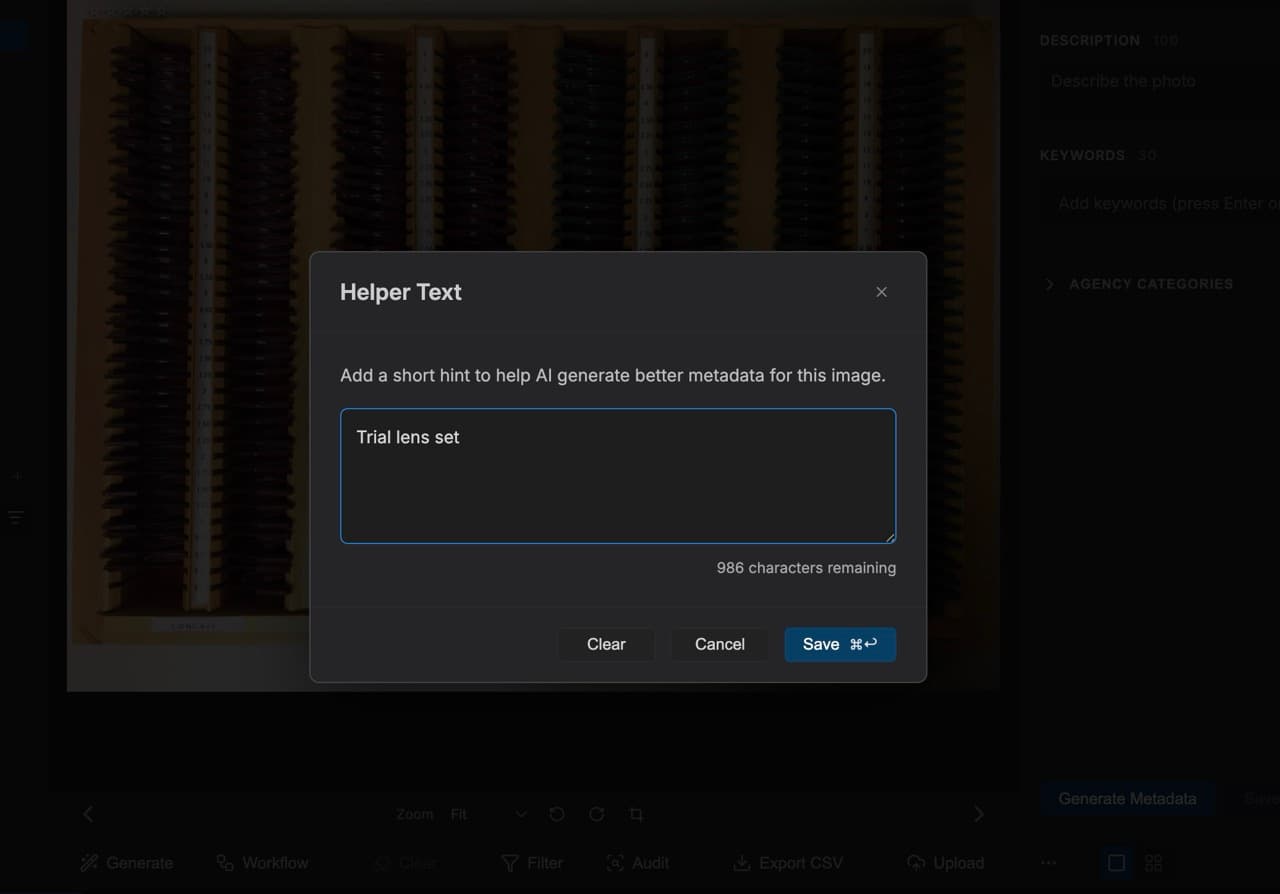
It's a small step that matters most precisely in the categories worth shooting: the rarer and more valuable the subject, the more a one-line hint improves the keywords, and accurate keywords are what get a niche image found by the few buyers searching for it.
Shoot it, but get permission first
A practical word before you start. Specialized environments are specialized partly because they're private, and clinical settings doubly so. Always get explicit permission to photograph in any workplace, and never capture patients, customers, or staff without their consent. Equipment, empty rooms, and consenting, properly-released subjects are your safe ground; anything else is a release problem and a trust problem waiting to happen. Respect for the people and the space is the price of admission to a category that pays.
The takeaway is simple. Stop fighting for attention in categories where everyone already competes. Find the corner of the world you have access to that the public doesn't, shoot it honestly and with permission, label it accurately, and let scarcity do the work that better lighting never could.